
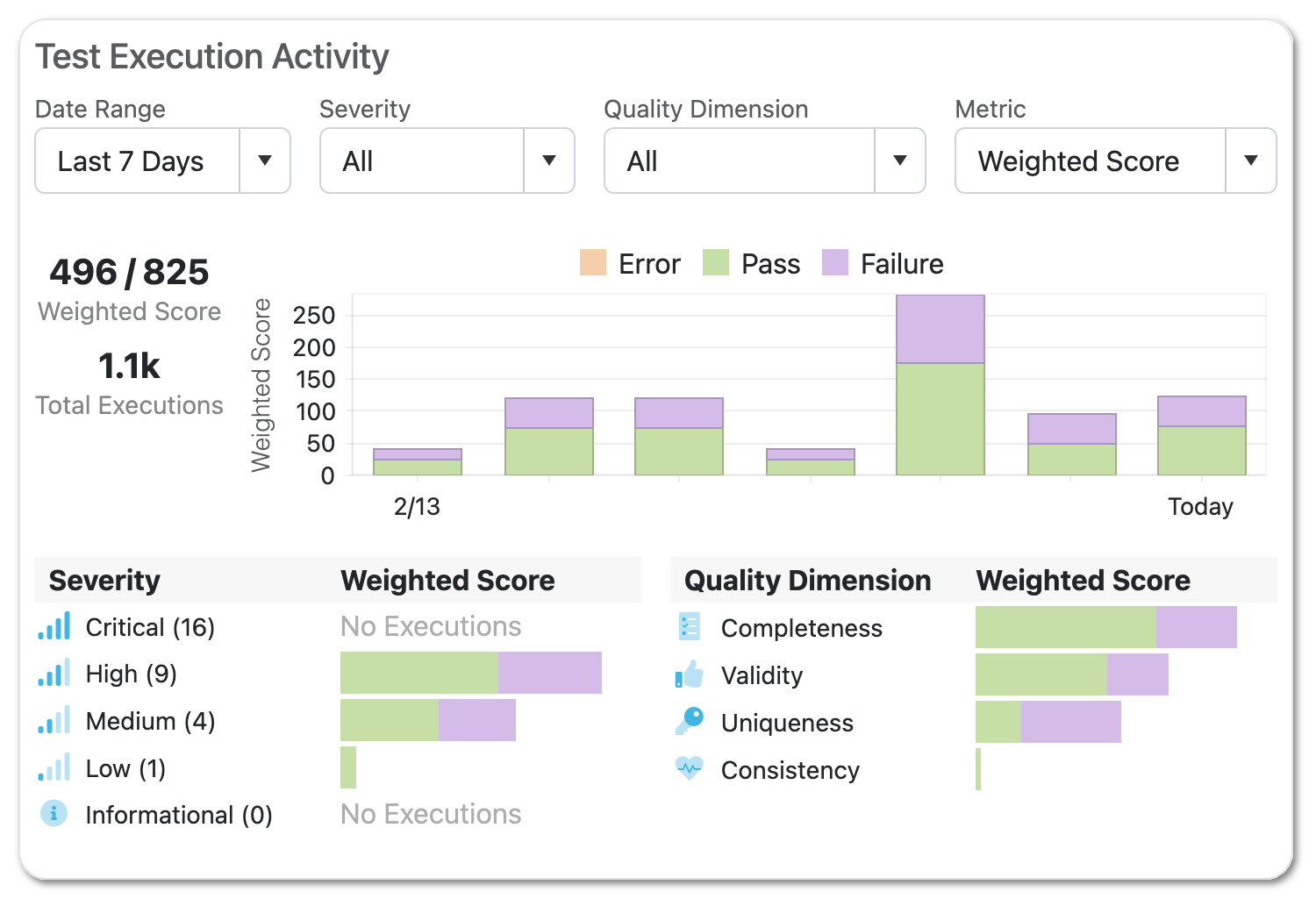
Results by severity and quality dimension
Find where bad data enters your systems, and stop it at the source.
Validatar profiles your production data, checks it against your business rules and its own history, and traces each failure back to where it entered. Your team fixes the process that creates bad data, not just the rows it leaves behind.
Results by severity and quality dimension
Most bad data isn't created in the warehouse. It arrives there.
It starts in the source systems and business processes that capture it. Cleaning it downstream treats the symptom; the same errors arrive again with the next load.
Typos, skipped fields, and free text where a code belongs.
A new code, a renamed field, or a changed default nobody announced.
Files that arrive late, incomplete, or in a format that quietly changed.
Business expectations that live in people's heads instead of in tests.
Data quality is a loop, not a cleanup project. Each pass leaves one more check in place.
Dozens of built-in profiles, like null and blank rates, distinct counts, and value ranges, plus checks against your business rules and recent history.
Lineage shows which source the bad data came from and which reports and tables downstream it affects.
Failures go to the owner who can fix the process. The check stays in place, so the problem can't return unnoticed.
Every Validatar test checks one quality dimension. Covering more of them is what earns a table a higher trust score.
Is all the expected data there?
Are keys and IDs unique where they should be?
Do values follow the business rules?
Does it match its history and other systems?
Does it reflect what really happened?
Was it updated as recently as expected?
Do records link up the way they should?
Is the level of detail what it should be?
Short answers to what data teams ask first.
Checking production data against what it should be: its business rules, its own history, and the expectations for each quality dimension, such as completeness, validity, and timeliness. Validatar runs those checks automatically and tracks the results over time.
ETL testing proves data moved through your pipeline correctly. Data quality asks whether the data was right to begin with, starting at the source systems that create it. See ETL testing.
No. Validatar comes with more than 40 standard data profiles and more than 100 ready-made tests, and template tests apply a check to every matching table automatically. For anything else, Validatar AI helps you write the custom rule you need.
The aspects of quality a test checks, such as completeness or validity. Each test has one, and the number of dimensions a table's tests cover feeds its trust score.
The owner is alerted, or an issue opens in Jira, and lineage shows what's affected downstream. The full result history shows when the problem started.
Further reading
Works on
Related solutions
Walk through profiling, rule checks, and lineage on your own data with our team.