
One template test, generated for every table
Stop bad data before it moves downstream.
Validatar tests every load into your lake or warehouse by comparing each layer to the one before it, to your business rules, and to its own history. The checks can run as gates inside your pipeline, so a failed process stops before it reaches an end user.
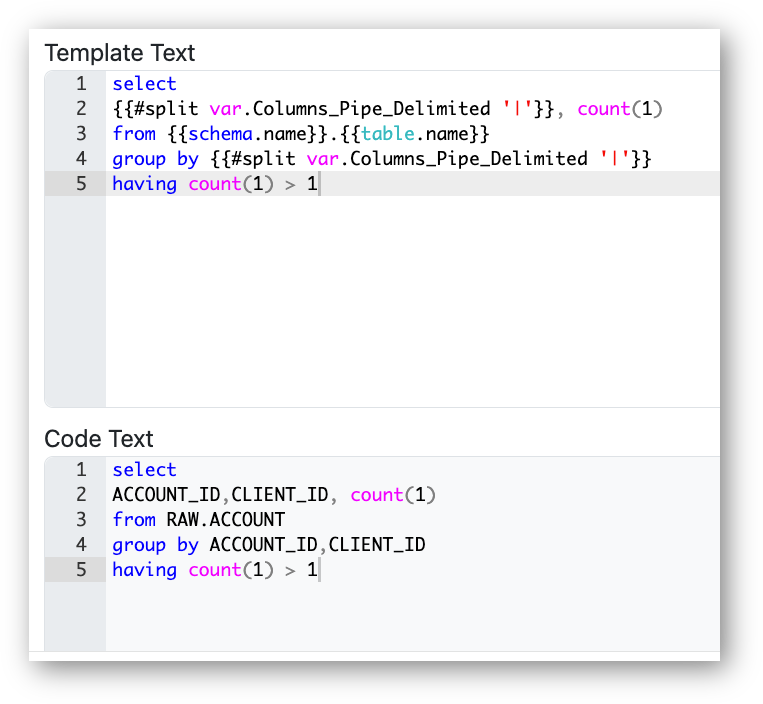
One template test, generated for every table
At every hop. A check at the end finds the problem; a check at each hop finds where it started.
Counts and totals in the extract match the system it came from.
No dropped rows, broken types, null keys, or duplicates from a load that ran twice.
Business rules, joins, and aggregations produce what the logic says they should.
Today's numbers are compared to recent runs, so drift shows up before a stakeholder spots it.
Compare a layer to the one before it to prove data moved and transformed completely.
Check ranges, values, and patterns your business has agreed the data must follow.
Compare today's load to recent history to catch drift and sudden changes.
Template tests are driven by your metadata, so new tables get tested automatically as they appear, without writing a test for each one.
Your orchestrator calls Validatar after each load. If the tests pass, the pipeline continues. If they fail, it stops before bad data spreads downstream, while Validatar alerts the right team.
Works with
Load runs
Your ETL or ELT tool moves the data.
Validatar checks run
The pipeline triggers a Validatar job.
Pass
The pipeline continues.
Fail
The pipeline stops and the owner is alerted.
Short answers to what data engineers ask first.
Checking that data extracted, transformed, and loaded between systems arrives complete and correct. Validatar compares each layer to the one before it, to your business rules, and to recent runs, after every load.
Yes. The same tests apply wherever data moves: into a warehouse, a lake, or a lakehouse, whether it's transformed before or after it loads.
Your orchestrator triggers a Validatar job through its API, waits for the result, then continues or stops. Guides cover Azure Data Factory, Informatica, Apache Airflow, and any tool that can make a REST call.
Yes. Tests and jobs export from one project and import into another, so they move through your CI/CD pipeline alongside your code. Guides cover GitHub Actions, Bitbucket Pipelines, and Azure DevOps.
No. A template test is written once and generates a test for every table that matches its metadata, including tables added later.
ETL testing follows data through your pipeline, layer by layer. Reconciliation proves two systems that both stay in use agree with each other. See data reconciliation.
The checklist covers what to test at each hop, when to run each check, and how to wire the gate into your pipeline.